
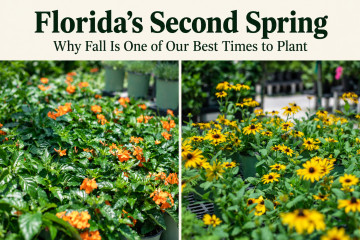
I was hoping October would ease us into gardening weather. A little less heat, a little less humidity, maybe an afternoon outside without needing a shower immediately afterward.
Instead, we’ve spent much of the past two weeks wondering if the sun is ever going to shine again.
The rain has certainly slowed things down at our garden centers, and I understand why. Walking around shopping for plants loses some of its charm when you’re watching the radar and wondering whether you left a window open. After a long, hot summer, we’re ready to get outside again. The weather just hasn’t been particularly cooperative.
But there is an opportunity in all this rain, once conditions are safe and the ground has had a chance to drain. Moist soil can give new plants a helpful start. And here in Southwest Florida, we’re moving into a season when planting makes a lot more sense than many newcomers realize.
First, though, let’s talk about what’s happening outside.
With Isaias in the Gulf, we have another reminder that October is still hurricane season. The local forecast this week has pointed to rain as a concern for the Suncoast, even with the storm’s center expected to remain offshore on its way toward the northern Gulf Coast. Conditions can change, so keep checking the National Hurricane Center and our local National Weather Service office before making outdoor plans. A planting project can wait.
El Niño is also part of the bigger weather picture. NOAA’s October 8 update confirms a strengthening El Niño, and the National Weather Service explains that El Niño winters tend to be wetter and cooler across West Central and Southwest Florida. That doesn’t mean every shower over the past two weeks came from El Niño, or that Isaias caused rain before it formed. It means the seasonal pattern gives us another reason to prepare for wet stretches while staying flexible when the weather changes.
For gardening, that flexibility matters more than picking one supposedly perfect Saturday.
Take advantage of a safe break in the weather. Let saturated areas recover. And use what the rain is showing you to make better decisions about your yard.
After the weather clears, look at where water collects and where it drains quickly. Notice which beds stay soggy long after everything else has dried. Those observations can save you from planting something in a spot where it will struggle for years. UF/IFAS recommends evaluating persistently wet areas for different planting approaches, including suitable rain gardens or raised beds. Avoid walking and working in muddy beds, which can compact the soil around roots.
There’s a big difference between taking advantage of rainfall and putting a new plant into a hole full of water. We’re aiming for a well-watered garden, not waterfront property for the roots.
And that brings us to Florida’s second spring.
If you moved here from up north, your gardening instincts probably tell you that spring is for planting and fall is for cleaning everything up before winter. By October, you’re putting the garden to bed, bringing things inside and wondering where you stored the snow shovel.
Here, fall can be the beginning of some of our best gardening.
As temperatures gradually ease, fall offers an opportunity to plant suitable trees and shrubs and refresh tired landscape beds. UF/IFAS identifies fall as a favorable planting season, with cooler conditions helping plants establish. That doesn’t make October maintenance-free: hot, dry spells can still occur, and new plants still need attention.
The calendar may say fall, but your afternoon could still feel very much like August. Plant for the conditions you actually have.
If you’ve been looking at a gap in the hedge, a tired foundation bed or that one shrub that has been “coming back” for approximately three years, this is a good season to start planning an improvement.
Start with the rule UF/IFAS puts at the center of Florida-Friendly Landscaping: right plant, right place.
That means looking beyond the flower color and asking a few practical questions. How much sun does this spot receive? How quickly does it drain? How much room is available when the plant reaches its mature size? Can you provide the care it needs while it establishes? Matching the plant to the site comes before digging the hole.
A shrub that wants to be eight feet wide is not going to become a polite three-foot shrub because you asked nicely. You’ll simply own a hedge trimmer and a recurring appointment.
When planting shrubs, avoid burying them too deeply. UF/IFAS recommends keeping the root flare above the surrounding soil, backfilling with the soil from the site and keeping mulch away from the base. Give plants room to grow instead of packing them tightly together for an instant finished look.
You also don’t have to redo the entire yard. Freshening one bed or replacing a few poorly placed plants is a perfectly good fall project.
For seasonal color, we’re approaching the time when some familiar favorites can finally enjoy themselves.
Dianthus is a great example. Its pink, red, white and lavender flowers work beautifully along bed edges, in containers or planted in groups. UF/IFAS recommends October planting in most of Florida, with flowering continuing through winter and spring. Give it sun to partial shade and excellent drainage. Dianthus does not tolerate wet conditions, so it belongs on your fall shopping list, not in the puddle beside the downspout.
Sweet alyssum is another option for softening the edge of a bed or spilling over a pot. Its small flowers have a honeylike fragrance and attract bees and butterflies. UF/IFAS lists October through late spring as its planting window. It prefers full sun, tolerates some shade and needs well-drained soil. Newer, more heat-tolerant selections are worth asking about while our afternoons are still warm.
For partial shade, consider New Guinea impatiens. They provide bold color in beds and containers and can flower through winter in South Florida. They need regular moisture, good drainage and protection from frost. UF/IFAS now recommends these and other suitable alternatives rather than traditional impatiens, which its assessment identifies as a potential invasive risk. Make sure you’re choosing the right type for your location.
The useful thing about an unpredictable season is that you don’t have to commit to everything at once. Plant one suitable, well-drained area when conditions allow. Hold off on a wet bed. Use containers with drainage holes where you want immediate color while you work out a longer-term plan.
Then keep checking the soil.
Recent rain doesn’t guarantee that a new shrub’s root ball will stay moist next week. UF/IFAS notes that establishment takes months, and stopping supplemental watering too soon can stress new shrubs unless regular rainfall continues. Check the root ball as well as the surrounding ground, and adjust watering to actual conditions. If it’s already saturated, more water is not helping.
Likewise, resist the urge to fertilize every plant that looks unhappy after a soaking. UF/IFAS cautions that fertilizer won’t speed recovery from heavy-rain damage, and another downpour can carry it away. Sometimes the most useful thing you can do is give the roots time to breathe.
We’d certainly love to see you back at our South Venice, North Venice and Port Charlotte garden centers when it’s safe to get out. Bring a few photos of the area you’re working on, an idea of the sunlight it receives and, after these past two weeks, a pretty good understanding of where the water goes.
We can help you turn that information into a planting plan.
You don’t need to wait until spring to enjoy your yard again. Around here, some of the best gardening is still ahead of us. We just need the weather to leave us a few openings.
I’ll take cooler mornings and a little sunshine whenever Florida is ready.
For more gardening guidance and current weather information, visit UF/IFAS Gardening Solutions, the UF/IFAS South Florida Gardening Calendar, National Weather Service Tampa Bay and the National Hurricane Center.