
Florida summer gardening is not for the faint of heart.
This is the time of year when you walk outside at 8:30 in the morning and immediately question every life choice that led you to this climate. The humidity is personal, the sun is aggressive, and by lunchtime, some plants look like they’ve already submitted a formal resignation letter.
But here’s the good news: you can still have a beautiful yard, colorful containers, and happy garden beds in the summer. The trick is not trying to force a “northern garden calendar” onto Southwest Florida. Our summer is its own beast. It is hot, wet, humid, stormy, buggy, and dramatic. So instead of fighting it, we work with it. That starts with choosing plants that actually like Florida’s version of summer.
Every plant has a personality. Some are easygoing. Some are needy. Some want full sun and barely flinch. Others want shade, perfect drainage, filtered light, compliments, and a small emotional support group.
In the middle of a Florida summer, plant choice matters more than ever. A plant that looks great in March may not be thrilled when July shows up with 94 degrees, afternoon thunderstorms, and humidity you could practically scoop with a spoon. That does not mean your yard has to look tired until October. It just means we need to pick the right plants for the right places.
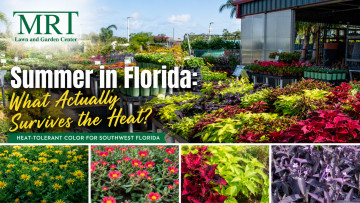
For sunny spots, there are still plenty of good options for color. Heat-tolerant annuals like vinca, portulaca, celosia, and coleus can all be great choices when planted in the right conditions.
Vinca is a solid summer performer and tends to handle heat well, especially in sunny areas with good drainage. The “good drainage” part is important. Vinca does not want to sit around with wet feet after every afternoon storm. None of us are at our best with soggy shoes, and plants are no different.
Portulaca is another good one for hot, sunny areas. It has that tough little “I was built for this” attitude and works especially well in containers, borders, and spots that get plenty of sun.
Celosia brings fun color and texture, and it holds up nicely in summer heat when planted where it belongs. It is one of those plants that looks like it has a little personality, which we always appreciate.
Coleus can be a great option too, especially when you want colorful foliage instead of relying only on flowers. Some varieties can handle sun, while others prefer more shade, so this is one where it really helps to check the variety before planting it in the hottest spot in your yard and hoping for the best.
Hope is not a watering strategy. It is also not a landscape plan. When someone says, “This plant died,” the plant may not have been the problem. It may have been the location. Before you pick plants, look at the spot you are planting in. Does it get full sun all day? Morning sun only? Afternoon sun, which is basically nature’s air fryer? Is the area shady but still bright? Does water drain well, or does it turn into a temporary pond every time the sky opens up? These details matter.
Full sun plants usually need at least six hours of direct sunlight, but in Florida, afternoon sun can be much more intense than morning sun. A plant that handles “full sun” in another state may not be interested in our version of full sun, which occasionally feels like it was preheated to 425.
Drainage is just as important. Summer rain can be heavy and frequent, so plants that dislike soggy soil need to be placed in areas where water can move through. If the bed holds too much moisture, you may need to amend the soil, raise the planting area, or choose plants that can handle those conditions better.
Watering is another big one. New plants need regular watering while they get established, but more water is not always better. Too much water can cause root problems, especially when combined with heat and humidity. It is a balancing act, and yes, Florida likes to make the balancing act sweaty.
Container gardens can look great in summer, but they dry out faster than landscape beds. Pots in full sun may need more frequent watering, especially smaller containers.
The type of pot matters too. Some materials heat up faster than others. A small dark container sitting in full afternoon sun can become a tiny plant sauna, and not the relaxing spa kind.
Use good potting mix, make sure the container has drainage holes, and match the plant to the amount of sun that area actually gets. Adding mulch to larger containers can also help hold moisture and keep roots a little cooler.
And please, for the love of all things green, do not use a pot with no drainage hole unless you are trying to create plant soup.
Mulch does a lot of heavy lifting in summer. It helps conserve moisture, regulate soil temperature, reduce weeds, and protect plant roots. It also makes beds look cleaner and more finished, which is always nice when the rest of the yard is growing at jungle speed.
The goal is usually a nice, even layer around plants, but not piled up against stems or trunks. Mulch volcanoes are not a design feature. They are a cry for help.
Keep mulch a little pulled back from the base of plants so air can move and moisture does not stay trapped against the stem.
Sometimes the best summer gardening strategy is giving plants a little help.
Shade cloth can be useful for protecting sensitive plants, new plantings, herbs, or container gardens from the worst of the afternoon sun. It does not mean your plants are weak. It means they are living in Florida and would like a break, which is very reasonable.
Good watering tools also make a difference. A quality hose, watering wand, sprinkler, timer, or drip setup can help you water more consistently and efficiently. That matters when summer weather bounces between “desert surface” and “monsoon” in the same afternoon.
Soil amendments can also help improve planting conditions, especially in beds that drain poorly or dry out too quickly. The better the soil, the better chance your plants have of handling stress.
Florida summer is not the time to plant everything you saw on a postcard from North Carolina and hope it adapts. This is the time to choose tough, heat-friendly plants, pay attention to sun and water, and set your landscape up for success.
A beautiful summer yard in Southwest Florida is absolutely possible. It just takes a little planning, the right plant choices, and the humility to admit that the sun is in charge from about June through September.
Stop by MRT and we’ll help you pick the right plants for the right spots, because Florida summer may be intense, but your garden does not have to look personally victimized by it.